Friday, January 29, 2016

Acid/Base Reactions-Salt and Water(Salty Water?)

First things first, salt does not mean table salt, a salt is the compound formed from the anion of an acid, and the cation of the base.

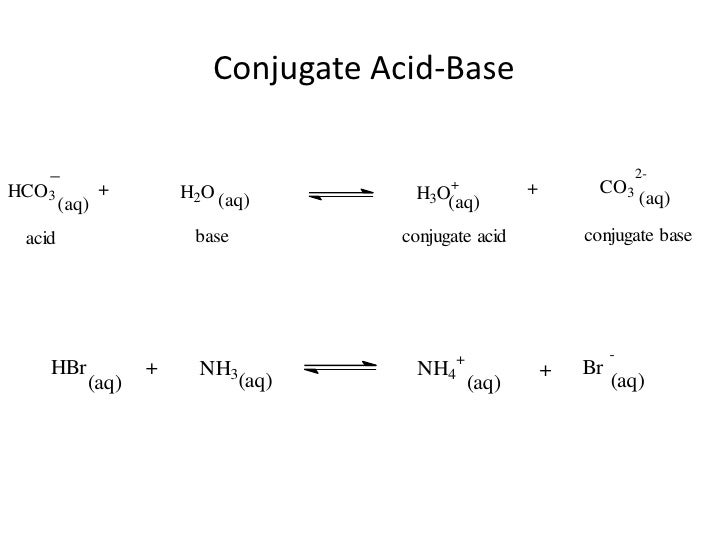
Now that that's cleared up a Acid Base Reaction looks like this:
\
Which shows the two types of reactions, however we are only going over Arrhenius Acid/Base reactions, ones that form a salt and water every time.

There are three types of salts that can be produced, neutral, acidic, and basic.
A Neutral Salt is produced when a Strong Acid reacts with a Strong Base, or a Weak Acid reacts with a Weak Base.
A Acidic Salt is formed when a Strong Acid reacts with a Weak Base
and A Basic Salt is formed when a Weak Acid reacts with a Strong Base

Acid Base reactions happen in water, and in water, the H+ ion does some strange things
Which are gone over HERE by Crash Course.
And he basically goes over everything, Haben Sie einen schönen Tag.

Wednesday, January 27, 2016

Acids vs. Bases

There are two parts to this unit. Acids and Bases. There are two general definitions of both Acids and Bases, one that defines them by the ions that make them up, and another that defines them by the ions that are exchanged in the reaction.

An Acid can be defined by as the chemical that either contains an H+ ion, or it is the chemical in the reaction that donates a proton. A Base is defined as a chemical that either contain OH-, or it is the chemical that receives a proton. A picture to help:
There are two types Acids and Bases, Strong and Weak. Which I went over HERE.
Crash Course also went over it HERE

Thursday, January 14, 2016

Reaction in Solution

Lets get this straight. If had trouble with Stochiometry, this will either be very helpful for getting you better at that, or you'll hate it, because that is essentially what your doing. If you need a refresher on Stoich, go HERE(shameless self-advertising) and do some reading, then come back, I'll wait.... Ok your back, so now that you know what your doing it is really the same thing, but to get moles you use molarity and volume, not molar mass. Use the 5 STEP PLAN
1) Balance equation
2) Calculate moles of substance
3) Determine the Limiting Reagent
4) Calculate moles of product
5) Convert to Units
Its that easy, here is picture to show how easy it is:
And a video for those auditory learners out there.
I think thats all, peace off.

Sunday, January 10, 2016

Dilutions

M1 x V1 = M2 x V2
This equation is the most important from this topic. It will help you figure out how to work with taking a solution and diluting it. The M stands for Molarity(moles per liter) and V for volume. Obviously the 1 and 2 stand for the original values the result values. HERE Crash Course goes over dilutions and Molarity in a video you've probably already seen.

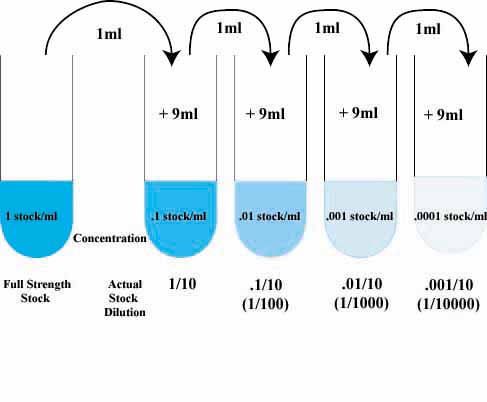
Dilutions are a solution that's been "watered down" or had extra solution of a different molarity added. When "watering down" a solution to a certain molarity, you use a serial dilution, which means you take an aliqout (amount of solvent removed to make new solution) of equal amounts, and equal amounts of water. They look like this:
HERE is a video explaining serial dilution as it involves microbiology.
That should be all you need.

Friday, January 8, 2016

Aqueous Solutions

Most Ionic Compounds will dissolve in water, and when they dissolve they disassociate into their respective cations and anions. The number of Ions that are in a Ionic Bind dictates how many Ions are disassociated, for example NaCl disassociates into two Ions but MgCl2 disassociates into three ions.
So before I start to explain a unit about something, I should probably go over the general thing, which in this case is Aqueous Solutions. An Aqueous Solution is a mixture that takes place in water, with the solute being dissolved into water, which is the solvent. Examples include Chlorine dissolving in a pool.

However Polar Substances will disassociate based on their attraction to water, while most insoluble materials are non-polar.

If a molecule contains -OH then the shorter the C-H chain is the more likely it is to dissolve in water 
Crash Course helped me understand this better HERE
Oh,and understanding polarity might help, so HERE
And a visual of Polar vs Nonpolar: