Thursday, December 10, 2015

Magical Lab

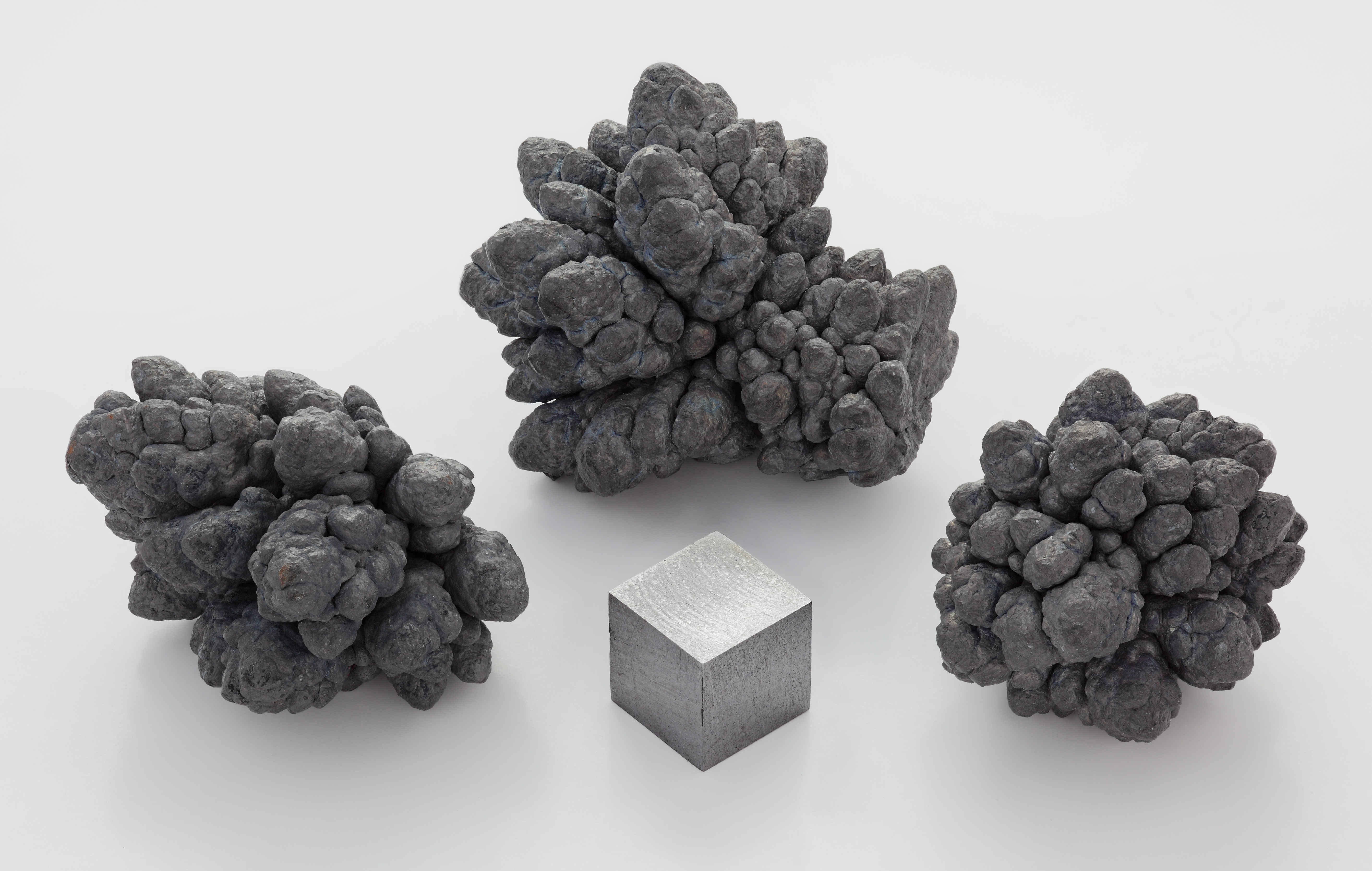
Today we made solid copper out of a liquid and a nail. We made a thing out of two other things. MAGIC. Look:
Copper grew on a nail.
The way it works is via a RedOx Reaction where a mixture of Copper (II) Chloride and Iron switch places, and in our situation of Iron (III) Chloride and Copper, which appeared on the degrading nail.
Here is a video that shows it. However the video is slow to start so Here will take you to the reactions visible start. Overall it was an interesting look at magic.

Tuesday, December 8, 2015

Percent Yield

Percent Yield is the percentage of a compound formed when compared to the theoretical yield. This happens because of human error, side reactions, and impurities in the chemicals. Using Percent Yield you can figure if a certain Ion was used for the reaction, such as when Iron and Copper Chloride react, and two possible Ions of Iron can form. We used this to figure out the Ion of Iron in the Magic Lab. The formula and a short summary of is uses are shown here:
Here some guys go over Percent Yield and finding and interpreting it.

Monday, December 7, 2015

Limiting Reagant

A Limiting Reagants is the chemical in a reaction that "runs out" first. To find it you can either calculate and compare the amount of theoretical yields. The compound that results in the smaller of the two values is the Limiting Reagent, while the other method is by multiplying the moles of them by the mole ratio from the equation and the one with less moles is the Limiting Reagent. Here Crash Course discusses them along with Stochiometry. Here is a image showing a simple version of what the chemicals would look like if there is a Limiting Reagent:

Friday, December 4, 2015

Stochiometry

That really weird word is the name for the science of stuff. OK. Stochiometry is name for the science of finding theoretical yields using chemical reaction equations and conversion factors. When worked out it looks like this:
It actually makes a lot more sense do to its nature as an application of mathematics to chemical reactions.  Crash Course has a run down HERE.

Monday, November 30, 2015

RedOx

Oxidation is part of RedOx, which stands for Reduction Oxidation Reaction. In it one compound reacts with a pure substance, and if oxidation can occur, a reaction will occur. Oxidation occurs due to these rules:
In these reactions, only a single chemical replaces another, either cations switch, or anions switch. You can figure if the cations will switch using the Reactivity Series for Metals:
Where a metal has to be more reactive than the one it is trying to replace to switch with it. The Reactivity Series for Non-Metals are on Group 7 on the Periodic Table. An important Acronym for RedOx is OILRIG, which means Oxidation Is Loss, Reduction Is Gain. 

Crash course explains RedOx much better HERE

Sunday, November 29, 2015

Strong vs. Weak Acids

After my last post I realized that I neglected to state the differences between Strong and Weak Acids. All that really matters is the difference between them when it comes to disassociating Acids for Acids Base Reactions. The key to telling them apart is that all Strong Acids have enough Oxygen to outnumber the Hydrogen by at least 2. However, HCl, HBr, and HI are all Strong Acids as well. HERE, Crash Course goes over the basics of pH, and Strong and Weak Acids.

Wednesday, November 25, 2015

Acid Base Reactions

Acid Base Reactions are reactions that involve an acid and a aqueous compound forming water and an aqueous salt. A salt is a cation from the base, and an anion from an acid. The hydrogen from the acid is switched with the cation of the compound, which must have a hydroxide poly-atomic ion in it You would then disassociate and turn into a Complete Ionic Equation, then into a Net Ionic Equation. A picture of a balanced Acid Base Reaction probably helps understand:
HERE, Crash Course goes over Acid Base Reactions as well.

Tuesday, November 24, 2015

Compustion

Combustion is a reaction that only occurs when O2 is present. Three things to know about Combustion is:
1) There has to be O2.
2) Combustion of a Hydrocarbon always produces H2O & CO2.
3) It is RedOx reaction.
Some basic Combustion equations are:
HERE is a link to a video that shows how to balance Combustion equations.

Wednesday, November 18, 2015

Double Replacement Reactions

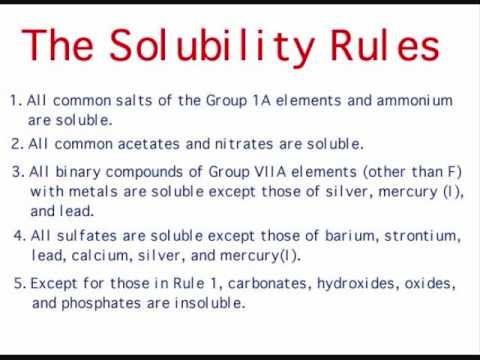
A reaction that takes place when two Aqueous Ionic Compounds switch cations and result in an Aqueous Ionic Compound and a Solid. However, not all occurrences of the switch are reactions, some will not produce solids and both compounds remain aqueous. You can tell if there is a solid formed using the solubility rules:
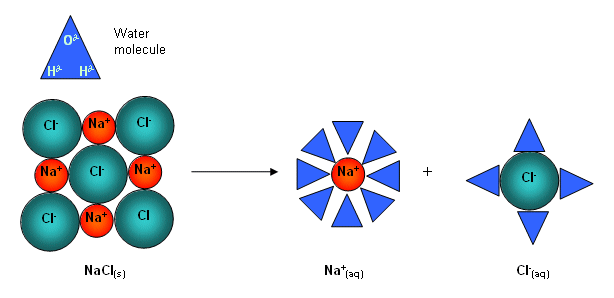
If no solid is formed, you're done, finished, no reaction, but if there is you must also balance the reaction equation. Then you must disassociate the equations, or break apart the chemical compounds into their respective ions to get the Complete Ionic Equation. After this you cancel chemicals that are on both side resulting in the Net Ionic Equation.

If you want to see how its done, go HERE.

Balancing Reactions

We learned how to balance chemical reaction equation. For this to happen, the chemical must follow the Law of Conservation of Mass, which says you can't make something out of nothing, and vice versa. To do this, you must make it so that each side of the equation has the same number of each chemical, as shown below:
To see it done, just go to THIS video.
It is a relatively simple idea, but can be hard, and is needed for the entire area of Chemical Reactions.

Tuesday, November 17, 2015

Test Day

You ever feel like your teacher is out to watch the world burn. What I mean is that my extremely intelligent friend walks out from the class before and says, "that was really hard." This is a guy who is 150% better than me at this class. I was worried, and rightfully so. When the kid who is normally one of the first done isn't finished before the bell, it's either A) too long; or B) REALLY HARD. It was the latter. I mean we all looked like this:
And that was the ones who didn't look like they'd been hit with a 2x4.
So I went to the Internet to learn more so I can bring my grade up and found: from Crash Course a playlist of all their Chemistry videos. So ya, I give up, Peace Off

Second Missed Lab

So I, being the "genius" I am, didn't learn from my first failed lab attempt and study up more, and, as the title suggests, failed the second Pre-Lab, the next day. aren't I smart. Luckily I figured out my mistake and learned more on Hydrated Compounds. I finally learned, and got to do more fun* math. *Not actually the fun part of math, that's Calculus.

However I found a really good graphic for Hydrated Crystals:
And then looked for more people to teach me, and find them I did. I found a SITE to help 

Lab That I Didn't Do

So I missed a lab on Hydrated compounds, but don't worry. I did the math part.
It's right here:

The lab was also directly related to the notes I missed, but it's most definitely my fault I didn't get to do it, which is a bad on me. So I looked to us video of someone doing it, and it's right HERE

Chemical Reactions

We started a unit, with no Pre-Test, it was weird. We took notes instead, on Chemical Reactions

Friday, November 6, 2015

Notes that I'm not there for.

So I missed a day of school, on the one day we didn't have book notes.
Luckily my awesome lab partner helped me and gave me notes.
And I understood nothing.
Luckily THIS guy helped understand. 
As well as a Chemistry webpage to help. YAY

Thursday, October 29, 2015

Test Day

So we took our Significant Figures test today, and I was all like, I got this, and then I was like "Whoa, this is a lot of numbers," then I was like "totally got an 'A'." So I think I did well. But it was really long and I goofed by finishing quickly so it felt like forever. And looked like this:
But I think I got this down. I also found out that THIS site is very useful for Metric Conversion

Wednesday, October 28, 2015

Mousse

Ya ever made mousse, and not the animal, the dessert, it looks like this:
It is delicious,
well, it's supposed to be.
However I found a really  useful site for converting to metric, right here

Monday, October 19, 2015

Measuring and Significant Digits.

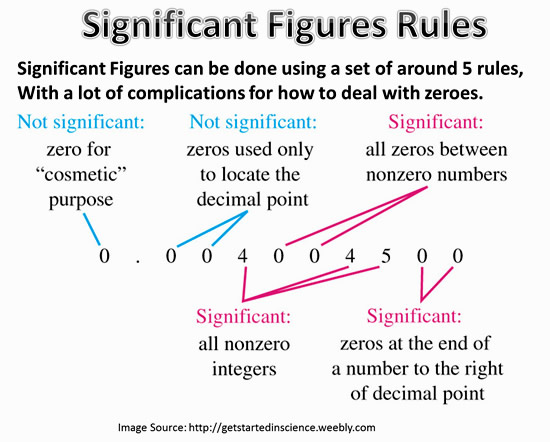
We learned how to figure out how many digits to put into a number when rounding. For addition you have as many decimal as the lowest number of decimals in the values, for multiplication the lower significant digits. It's apparently useful, but I don't know when to use it.
Ex. 4.35 x 3.5312 = 15.36 acording to the rounding of significant digits.
for more info go 

Sunday, October 18, 2015

Practice Test

So we had a practice test and I was all like, "What?" because I knew nothing that was on the test.and in the end I'm pretty sure I failed, but you never know. There was stuff like adding masses, and I was like Whoa, and Mind = Blown. So ya, I did stuff and felt like this:
So ya. 
And that concludes this episode of, "This Day in Chemistry"

Wednesday, October 7, 2015

Let's Cook, Aspirin.

So the other day I got to cook drugs. It was the Aspirin lab, and we had to cook it down to cause chemical reactions and purify it, we are currently waiting for it to dry as a purified crystallized form. It was actually pretty interesting watching the chemicals mix together, and comparing our batch to the burned batch next to us. It was pretty cool, and hot from the boiling water.
And Have a Great Day.
I also realized the effort that goes into the Pharmaceutical industry, I mean it's ridiculous.
I also learned more about Felix Hoffman, its inventor HERE

Tuesday, September 29, 2015

The hatred of celestial bodies develops.

I now hate space. When I was a kid I wanted to be an astronaut, not any more I mean I have to deal with this, and then these horrendous articles.  I am going insane, someone help me. This project is extremely time consuming and mentally tiring, I wish I knew some good ways to research stars.

Monday, September 28, 2015

Half Life

So today I learned that there's a term for when something loses half of it's radioactive nuclei. Guess what? It's called half-life. So creative isn't it. I digress, it is actually pretty useful for figuring out patterns of decay or something like that. I guess i'ts a cool thing I mean we'll take this,
And get this:
Which I guess is cool.


Want to learn more about radioactivity and half life. Then go

Data time

So today we did the data part of a half life lab, and cut a lot of paper. I mean a lot of paper.
Look at all that paper, Oh MAhh Gahhhdd
But thats it anyways

Monday, September 21, 2015

Week 2 Lesson 1 (Ich wisse nichts)

So I learned that I still know nothing. I have however learned the wonderful equation [(mass)(%0]+[(mass)(%)]=Avg Mass. In short I learned how to guess the likelihood of something showing up in nature. It's sort of like finding probability, but its a fact, not a chance. So ya, I learned I still am clueless in the mystical arts of chemistry. In other news I have decided to resort to this guy for knowledge on Stars.

Thursday, September 17, 2015

Week 1 Lesson 1(Still clueless,but less)

To day I learned the basics of Atomic structure, there are protons, neutrons, and electrons. There is Dalton's Atomic Theory and the Law of Constant Composition. There was JJ Thomson who used Cathode Ray Tubes and discovered electrons(Chocolate Chip Model). Then there was Rutherford Gold Foil Experiment, which discovered protons in a distinct shape. The current Atomic Model is called the Cloud Model and uses the Schrodinger Wave, which is really long and confusing, and I have no idea how it works.
The Wave

Week 1 Lesson 0(I know nothing)

So we took a pre-test and I successfully guessed a pattern of zig-zags becauseI realized that I know absolutely nothing, zip, nada, goose egg. To put it into terms of school, I got an F. It did show that the unit is very math based, so I should do well.

Monday, September 14, 2015

How to name chemicals?

So we have type I, II, & III naming. If there is an Ionic bond then it is either Type I or II and if Covalent, then it is Type III. I even have some diagrams to help
Which type to name.
Binary Compound?-Yes-Metal Present?-Yes-Does Metal form more than one Cation-Yes-Type I
                                                                      -No-Type III                                                           -No-Type II
Type I) Has Cation with set ionic charge goes with anion EX: K2O: Potassium Oxide
Type II) Has Cation with without set ionic charge that goes with anion EX: Fe2O: Iron (I) Oxide
Type III) Has no cation and uses covalent bonds that mixes ions, naming requires prefixes EX: H2O: Dihydrogen Monoxide

Nomenclature is weird

So Nomenclature is literally naming chemicals in a way that allows for "easy" naming of chemicals and their formulas. So they created a system with like 5 types of naming and each one has to be learned so you don't have to memorize hundreds of chemicals, but you have to memorize tons of Poly atomic, and don't get me started on those.

Thursday, August 20, 2015

Introduction. Also known as, who is the weirdo creating this blog?

Hello I am Mason. A junior at Francis Howell High School and this blog exists only for me to get an "A" in a chemistry class. That's the truth, not going to lie to you. I'm a competitive swimmer who wishes to be a Naval Nuclear Engineer. Anyway, I'm in National Honor Society and the National High School Academic Association. Whew, big deal right, well anyway that's about it, I hope this thing is useful or something like that. 


Peace out.